
Procedures
Airfield Operations
WIP - SUBJECT TO CHANGE
Airfield Operations are crucial for the safe and efficient movement of all aircraft, including military aircraft, both on the ground and in the air within the airport's controlled airspace. For military aircraft, these operations are particularly vital due to their unique performance characteristics, mission requirements, and often specialized equipment.
Pattern Parameters
Take a look at the pattern parameters below, keeping in mind, for landing, radio altitude (RAD ALT) is crucial, while barometric altitude (BARO) is also important for overall situational awareness. Radio altitude indicates the height above the ground, which is essential for low-altitude maneuvers like landing and takeoff. Barometric altitude, on the other hand, indicates height above sea level and is used for cruising and other phases of flight.
Fixed Wing
For most fixed wing aircraft, especially fast air, these numbers are to be adhered to when in the overhead pattern:
- Altitude: No lower than 1,500 AGL
- Speed: 300-350 knots
If your aircraft is not able to maintain those speeds, eg: warbirds, than adjust as necessary but maintain the altitude.
The altitude is set at 1,500' AGL to ensure clearance of any obstacles around the airfield, as well as, ensure you are outside of the normal vector of people taking off.
Rotary Wing
Given that rotary wing operate at slower speeds, the overhead pattern numbers have been adjusted accordingly:
Altitude: No lower than 1,000 AGL
500' lower than the fixed wing pattern to avoid conflict
Speed: 150-200 knots
Approaches
Key Considerations
Pattern Altitude: Always ensure you are at the correct pattern altitude before entering the traffic pattern.
Communication: Make clear and timely radio calls (or use an appropriate traffic advisory frequency at non-towered fields) to announce your position and intentions.
Visibility: Prioritize seeing and avoiding other aircraft. Maintain a good lookout.
Wind Conditions: Take into account wind direction and speed, as they dictate the active runway and can affect your ground track.
Midfield Crosswind Entry
Description:
This is a widely recommended method, especially for non-towered airports or when you need to observe the airfield. You approach the airfield at least 500-1000 feet above pattern altitude (typically 1500 AGL for light aircraft). You fly over the midfield of the runway in use, observe the traffic, winds, and active runway.
Procedure:
After crossing midfield, you continue away from the airport, usually on the "dead side" (the side opposite the active traffic pattern), descend to pattern altitude, and then maneuver to join the downwind leg at a 45-degree angle. This allows you to gain situational awareness before integrating with other traffic.
Military Variation (Overhead Break):
Military aircraft, especially jets, often use a high-speed overhead break. They fly along the runway at a high speed and altitude, then execute a sharp, high-G turn (the "break") over midfield to rapidly lose speed and altitude, configuring for landing and rolling out onto the downwind leg. This is designed for rapid recovery of multiple aircraft.
Straight In
Description:
While often discouraged at non-towered airports due to safety concerns with other pattern traffic, a straight-in approach is sometimes allowed or even directed by air traffic control at towered airports, especially for larger or faster aircraft (e.g., jets) or under low traffic conditions.
Procedure:
The aircraft approaches the runway directly on the extended centerline, typically from a significant distance out, without flying the full rectangular pattern. Pilots must ensure they have adequate separation from other traffic.
45
Description:
This is the most common and recommended entry for many civilian operations when approaching from the "live side" (the side where the downwind leg is).
Procedure:
You approach the airport at pattern altitude, aiming to intercept the downwind leg at a 45-degree angle, ideally abeam the midfield of the runway. This provides a clear and predictable path for integrating into the traffic flow and allows pilots to maintain visual contact with other aircraft.
Other Legs (Crosswind or Base Entry)
Description:
While not the primary recommended entry methods, pilots may occasionally be instructed by ATC or, in rare cases at uncontrolled fields with extreme caution, join the pattern directly on the crosswind or base leg.
Caution:
These entries carry higher risks due to potential conflicts with aircraft already established in the pattern and reduced time for situational awareness. They are generally only used when explicitly cleared by ATC or in specific, low-traffic scenarios with extreme vigilance.
The Overhead Pattern
Every overhead pattern is split into the same 5 phases:
- Upwind
- Crosswind / Break
- Downwind
- Base
- Final
Let's break it down:
Upwind
Crosswind / Break
Downwind
Base
Final
Want to know how you're doing?
The RSO (Runway Safety Officer) bot automatically grades your overhead pattern attempts and posts a debrief card after every landing, while the LSO (AIRBOSS) grades your arrested landings on the carrier. Check out Reading RSO Grading to learn how to read your scorecard, the ATC shorthand callouts, and the radar scope debrief — and Reading LSO Grading to decode the groove calls, wave-offs, and wires.
Airfield Markings
Hold Short Line  | Denotes where one should stop before entering a controlled runway or taxiway. The dashed line is always on the HOT side, meaning stop before the SOLID line. |
Direction Marker 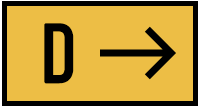 | Denotes the direction of taxiway DELTA - most commonly found at exits off of a runway or at intersections in the airfield. |
Distance Marker  | Used to indicate how much runway is remaining. When looking at this sign - the "5" indicates there is 5000 feet of runway left before you reach the button, or end, of the runway. These will be found on the left and right thresholds of the runways |
Taxiway Marker  | Incidates that you are currently on taxiway DELTA |
Runway Marker 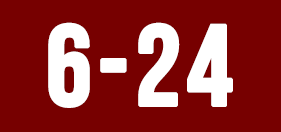 | Approaching a runway, 06-24. Further - when looking at this sign - the order of the num bers indicates what direction (left or right) is the end of the runway. So looking directly at this, the button of runway 06 will be to the left and 24 to the right. In addition - runway markings are done so in based on the compass direction. |
Runway with Taxiway Marker  | Denotes you are approaching a runway, 06-24, and are currently on taxiway DELTA. Commonly found in conjunction with a hold-short line |